When creating a new design or layout for your kitchen, choosing the perfect countertop stone can be difficult and time-consuming. The wide variety of countertop materials can be a challenge when choosing the one that fits your lifestyle. Your ideal counter should have a unique style, be durable, and require little maintenance. Based on these three criteria, it is possible to narrow down the search to two key materials: quartz and granite. These two materials provide the ideal solution to meet these needs. Choosing quartz or granite for your kitchen counter is a safe option. These materials not only bring life to your home, but they also have many other benefits. Quartz countertops offer ease of maintenance, whereas granite will require more attention. Quartz like granite will not let you down when it comes to aesthetics and style.
Quartz Countertops
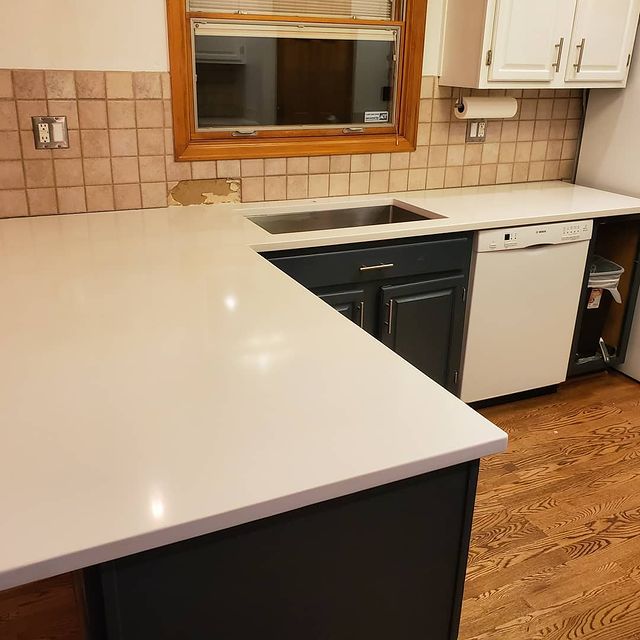
Quartz countertops are produced from natural quartz, one of the hardest materials found on Earth, to which a small amount of glass or metal elements is added to achieve a pleasant and varied aesthetic. Among the other advantages of quartz are it’s zero porosity, its texture which prevents bacteria from developing, and its resistance to stains, thus protecting the health of your family and facilitating the cleaning and maintenance of the counter. For this reason, there is no need to seal a quartz countertop. In addition to the durability offered by quartz, it is its aesthetics and a wide variety of colors that attract attention. The options it offers are nearly limitless, with colors ranging from white, black, or brown tones to gold and blue.
The design of a quartz countertop will not only bring character to your kitchen but will offer you better performance than other traditional materials. Quartz is an assembly of minerals held in place by resin. The higher the percentage of minerals, the higher the quality of the quartz. Very easy to maintain, resistant to stains, it has a suitable resistance but is limited to heat, especially if its percentage of resin is high. The main advantage of quartz countertops is the infinite choice of color, style, and texture. Indeed, since quartz is an amalgam of minerals, it is possible to offer solid colors or patterns, bright or sober, matte or glossy colors, etc.
Granite Countertops
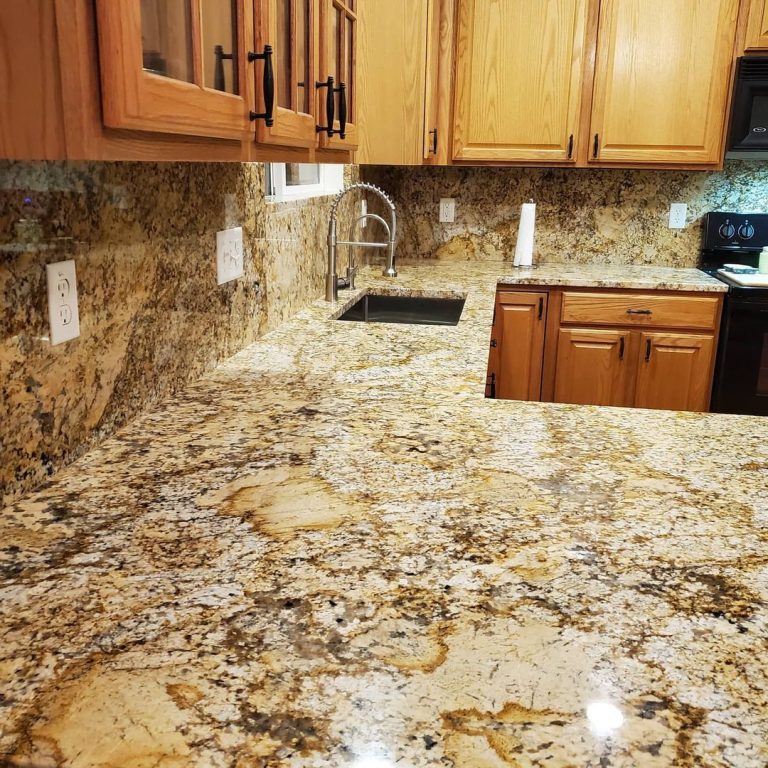
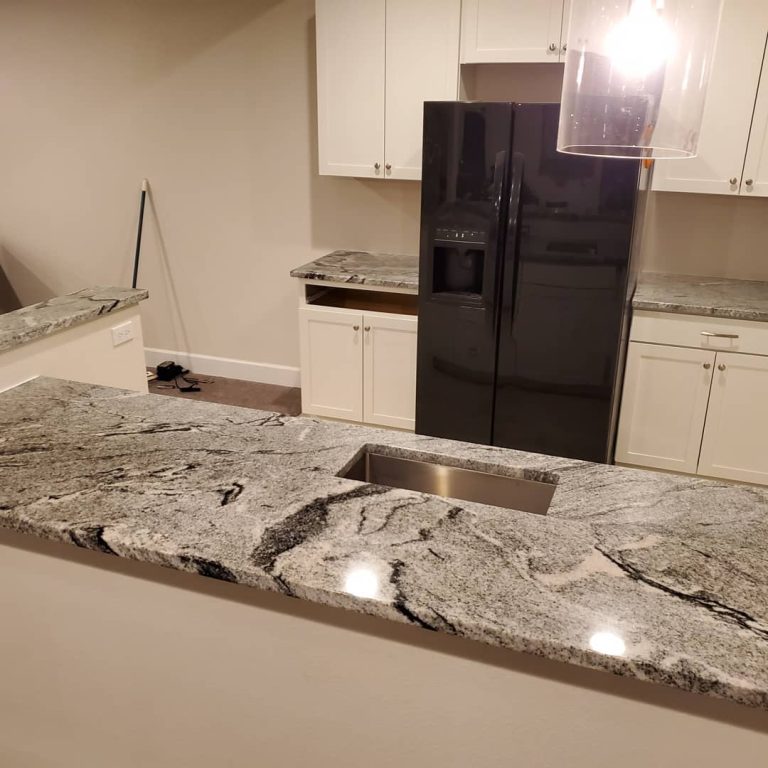
Another of the most used materials for countertops is granite. As with quartz, it is a very hard material. Granite is a natural stone that is cut in its natural state, before being polished for use in the home. Cleaning after each use is recommended to avoid staining. For this, it is advisable to use hot water and soap to preserve its shine.
Material of this hardness is difficult to scratch and can withstand temperature variations. Being a natural stone, granite does not offer as many possibilities in terms of colors, and each piece is unique. In addition, it is often necessary to base the design of your kitchen on the chosen slice of granite, which can be a difficult step. It is an easy-care, heat-resistant, and stain-resistant product, but does require sealing every year to maintain its quality.
Quartz and granite are two high-quality materials that add a sense of luxury to any kitchen. However, they have unique characteristics. Here are the main differences between quartz and granite to help you make an informed choice when renovating your kitchen.
Price Difference
The price of granite and quartz is similar. Some exotic granites or very specific colored quartz maybe a little more expensive, but it is usually a matter of style and not price in making your decision.
The Origin of Quartz and Granite
Although both materials come from natural sources, their origin and manufacturing process are completely different. When it comes to granite, there are very few steps between the quarry and your kitchen. The granite is cut into large slabs out of the rock and sent to the factory to undergo treatment and polishing. Then, when you have chosen your slab, it is cut according to the measurements of your counter, the edges chosen and your needs (sink, cooking surface, etc.).
In the case of quartz, the manufacturing process is a little more complex. Unlike granite and marble, quartz slabs are not mined directly from the mountain. Rather, they are created in the factory, hence the title of engineered stone. Also, quartz countertops do not only contain natural quartz. In the mix designed at the factory, there is between 92 and 95% ore. The rest is filled with a glass or polymer resin. Quartz normally makes up the majority of the stones used, but pieces of crushed granite, marble, and natural stones are also added, as well as recycled industrial pieces such as ceramics, glass, silica, and mirror. The manufacturer chooses the materials he wants to integrate to form specific textures and patterns. Finally, color pigments are added to the resin before it is mixed with the rest of the components. The same steps follow as the granite for the preparation of the counter following your purchase.
The Choice of Colors and Textures of Quartz and Granite
As you may have guessed, the great differences in manufacturing processes lead to varied choices of colors and textures. Although granite is mined in many parts of the world, accessible colors and textures remain limited. There are many styles of common natural stones, but also marble imitations and exotic patterns. However, the rarer the color and texture, the higher the purchase price. When it comes to quartz, the diversity of styles is almost endless. Since the tiles are factory-formed, the manufacturer can choose from a wide range of materials and color pigments to create unique and original designs. We find in particular imitations of marble and granite, but also plain surfaces in red, green, blue, fuchsia, etc. There is a greater variety of quartz countertops than granite.
The Physical Qualities of Quartz and Granite
In general, the physical characteristics of quartz and granite are similar, with a few exceptions. Both materials have a certain resistance to heat and shock, but we still recommend using trivets to avoid weakening the stone. In addition, quartz and granite are scratch-resistant, but it is still safer to use a cutting board to avoid dulling knives and prematurely wearing down an area of the counter. However, quartz and granite do not have the same stain resistance. Since quartz countertops are formed from ores bound together by a resin, their surface is completely smooth and non-porous. These worktops are therefore very difficult to stain. For its part, the granite being derived directly from the rock, is naturally porous. This defect can be corrected using a sealant, but the latter does not have a long lifespan and must be redone every year.
Maintenance of Quartz and Granite
For daily maintenance, granite and quartz are very similar. Simply clean the surface with soapy water and a clean cloth. It is important to avoid chemicals, such as bleach and degreasers. Mild soaps, such as dish soap, are sufficient to properly disinfect the work surface. To avoid accidental stains and dark circles, we recommend wiping up spills quickly.
However, the annual maintenance of these stones varies a lot. As mentioned above, quartz countertops are formed from a resin that creates a completely smooth surface. Unlike granite surfaces, quartz does not have to be treated every year. No matter what style you have in mind, you are sure to find the kitchen counter of your dreams. Whether it is granite or quartz, it will enhance the ambiance of the room.